In this post
A well-designed detox retreat gives the body what it needs to restore itself: structured rest, deliberate movement, food that nourishes rather than disappears, and enough stillness for the nervous system to settle. There is a version that involves little more than hunger and a juice machine. This is not that.
The word "detox" has been stretched so far by the wellness industry that it is worth being specific about what a week at The Namkhan actually includes — and what it does not.
The Namkhan sits on the banks of the Nam Khan River, a short drive from Luang Prabang's UNESCO-listed Old Town in northern Laos. It is a Small Luxury Hotels of the World property, but the retreat itself is not built around luxury as a selling point. It is built around rhythm. What most guests find, by day three, is that the rhythm is the thing that changes them.
What the Namkhan Detox Retreat actually includes
The programme runs for a minimum of two nights and a maximum of six, with a minimum age of sixteen. That range matters: two nights is enough to feel the shift; five or six nights is long enough for it to hold.
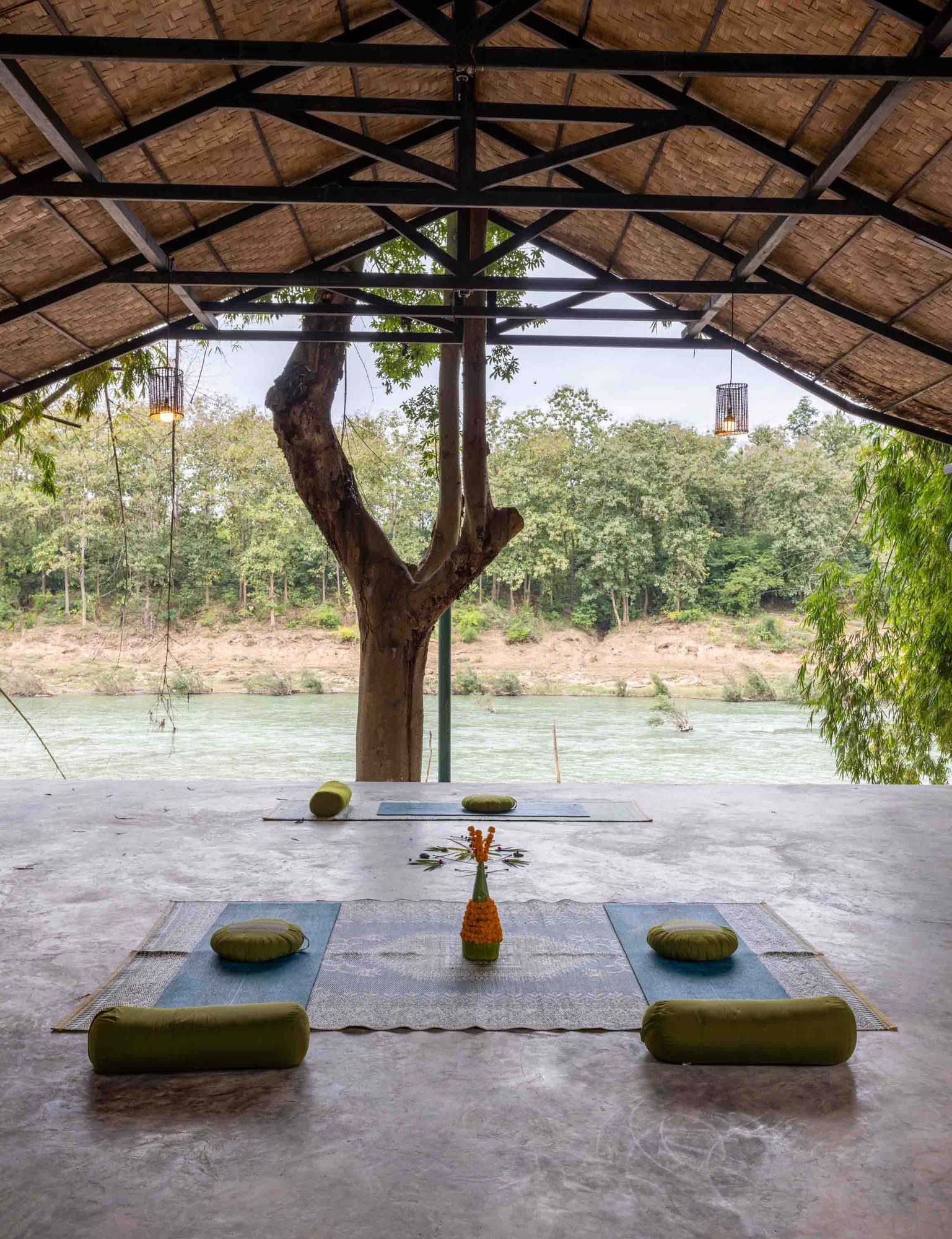
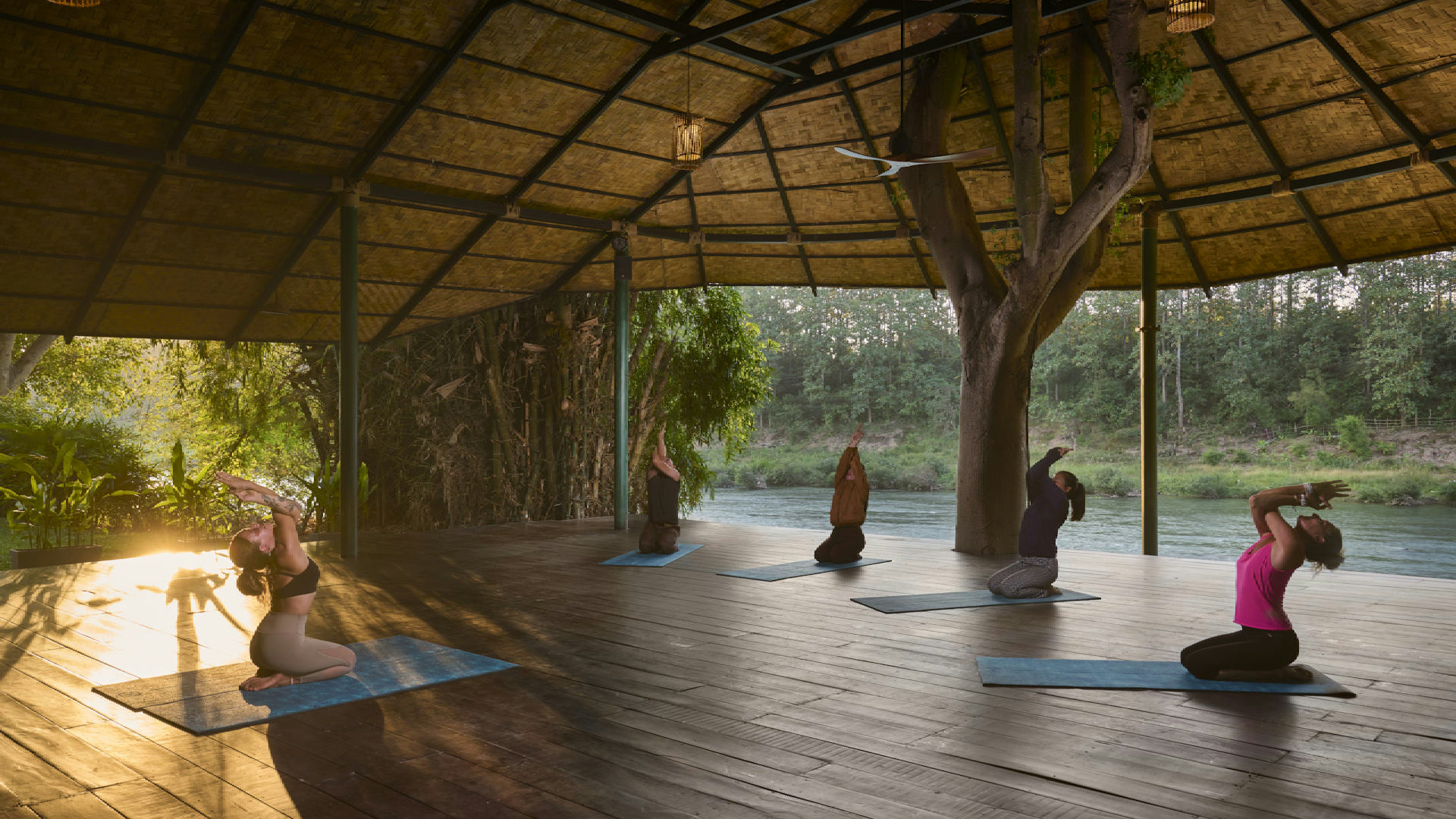
Every day includes group yoga twice — morning and afternoon sessions at the riverside pavilion. The pavilion is open-sided and faces the river, so the morning session begins in the low, cool light that arrives before the heat of the day. Yoga here is not performance. It is the frame around everything else.
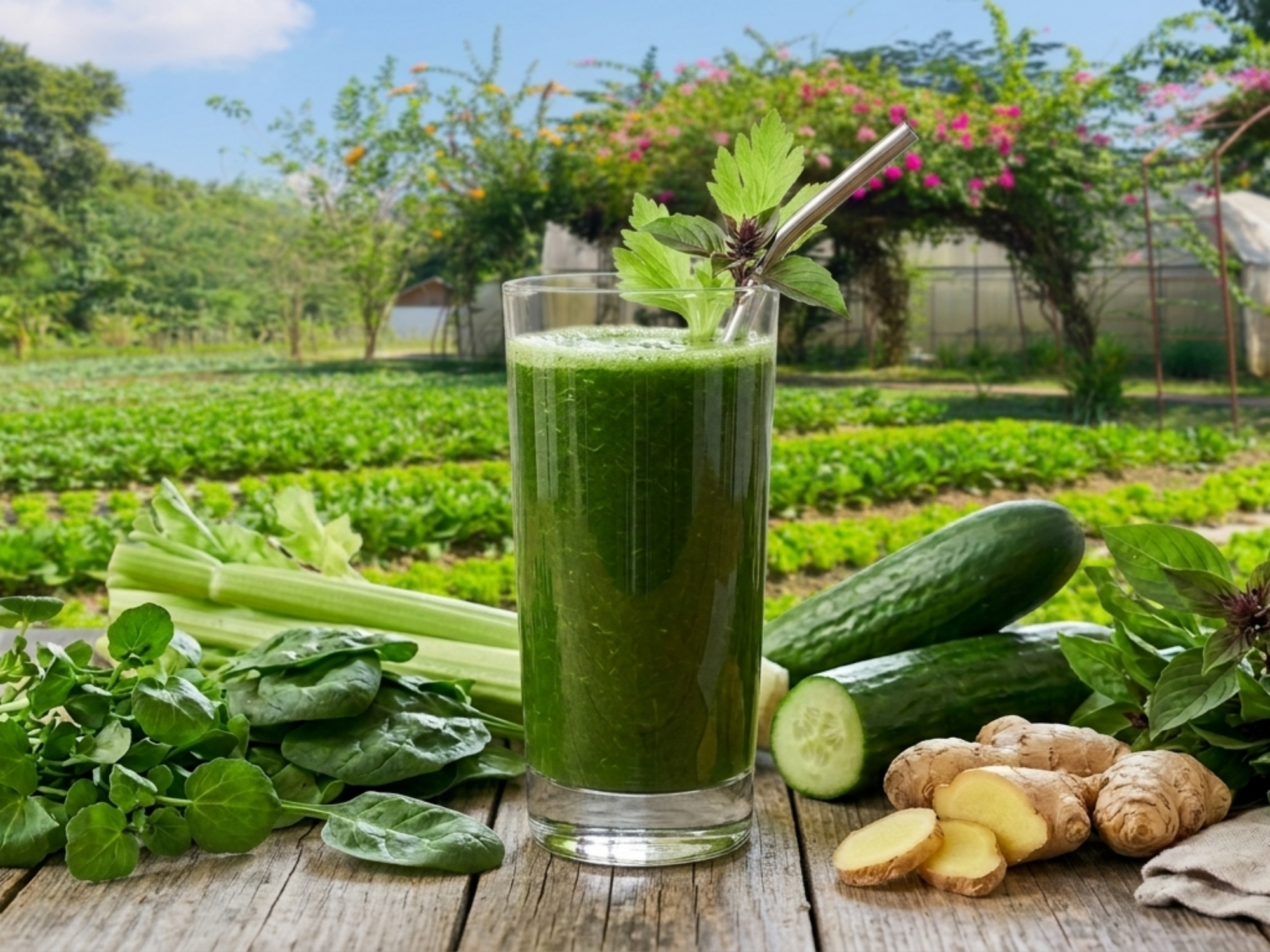
Meals are half-board, built around a wellness menu with detox drinks and herbal teas included. The kitchen at Roots, the resort's farm-to-table restaurant, draws produce from the nine-greenhouse organic farm on site, which grows more than sixty crops through the seasons. What arrives on the plate is specific to what is growing: not generic green bowls, but food with a geography. Guests who upgrade to the full immersion programme receive full board, with herbal teas served after each meal.
The standard programme includes a 60-minute therapeutic massage each day. The immersion programme extends that to 90 minutes and adds a daily ice bath and sauna session, plus private one-to-one yoga and meditation with the wellness team rather than in a shared group. The ice bath is run at the jungle spa with a breathwork guide present throughout — a guided session, not a solo plunge.
Both tiers include an eco-farm tour. Walking the farm with a team member who explains what is growing, how the mushroom production works, and which herbs end up in your morning tea is one of the more grounding hours of the week.
 Related readA Digital Detox Retreat in Laos: One Week, Phone-Free
What a detox retreat in Laos is not
It is not a fast. There is no caloric restriction, no juice-only protocol, no supervised elimination diet. The wellness menu at Roots is designed to reduce inflammatory load and support digestion, but it is real food. Guests who arrive expecting to be hungry leave pleasantly surprised.
It is not medically supervised in the clinical sense. The retreat is designed for healthy adults seeking reset and balance, not for people managing specific health conditions. Anyone treating a diagnosed condition should speak with a doctor before booking any retreat programme.
It is not a detox retreat in Thailand transplanted to a different country. The comparison comes up because Thailand has a longer wellness tourism infrastructure and many travellers searching for a body detox retreat in this region default to Thai options. If you are weighing the two destinations, the guide to Laos or Thailand on this site lays out the differences plainly. What Laos offers is different: a quieter country, a smaller town, a river culture that has not yet been fully absorbed by tourism. Luang Prabang remains a living city, not a wellness theme park. The monks still walk at dawn. The market still runs by torchlight. That context is part of what the retreat gives you, consciously sought or not.
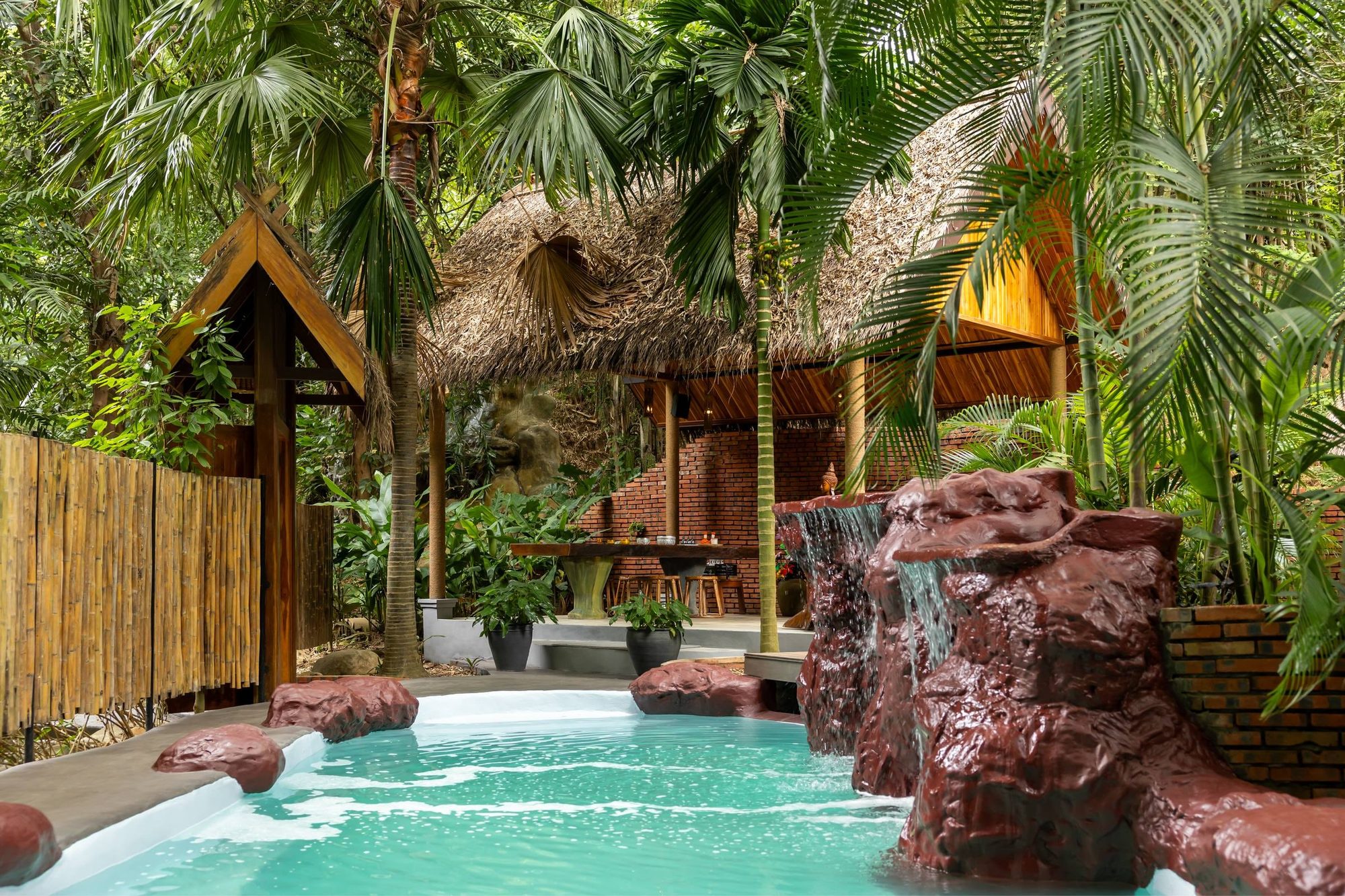
It is not a punishing programme. The pace is slow by design. Between sessions there is time to swim in the infinity pool, walk the 1.5 km forest trail through the resort grounds, paddle a kayak on the river, or simply sit at the Pool Bar and do nothing at all. That unstructured time is not filler — it is part of how a nervous system recovers.
A day on the detox retreat
There is no single fixed schedule, but a typical day has a shape. Yoga at the pavilion opens the morning, followed by breakfast at Roots. Mid-morning might be a guided farm walk or a craft workshop — bamboo weaving, herbal compress-making, or flower-folding with a local artisan. Lunch is at Roots or on the terrace.
The afternoon yoga session comes in the cooler hours before dusk. Between morning and afternoon, there is the daily massage — Lao therapeutic work, specific and slow, with a therapist who asks about pressure and health before beginning. For immersion guests, the ice bath and sauna follow, guided by a breathwork instructor at the jungle spa. Dinner closes the day, then the river at night, which is very quiet.
After two or three days in this rhythm, most guests report that their sleep changes. That is usually the first sign.
Choosing between the standard and immersion programmes
The standard programme suits guests who want structure and rest without intensity. Daily yoga, one massage per day, farm-sourced meals. It is enough.
The immersion programme is for people who want to go further. The additions — 90-minute massage, daily ice bath and breathwork, private yoga and meditation with the wellness team — shift the experience from restorative to genuinely transformative for some guests. The ice bath is not for everyone, but the guided breathwork makes it accessible to people who have never tried it.
If you are unsure which suits you, the team at The Namkhan can advise before you arrive. The retreat is bookable from two nights, so there is room to extend if the first days feel like the beginning of something rather than the whole of it.
Reserve your place on the Namkhan Detox Retreat — our own hotel; the programme page has current availability and configuration options.
Getting to Luang Prabang
Luang Prabang International Airport connects to Bangkok, Hanoi, Singapore, Chiang Mai and several other regional cities. Travel times are short from most Southeast Asian hubs. For UK travellers, the route typically involves one stop in Bangkok or Singapore; the UK Foreign Office travel advice for Laos has current entry requirements and health recommendations, and is worth checking before you travel.
If you are arriving via Bangkok, the guide to weekend trips from Bangkok to Luang Prabang on this site covers the journey and what to expect on arrival.
Who a detox retreat at The Namkhan suits
The retreat is designed for adults aged sixteen and over. It works well for solo travellers — the shared yoga sessions provide company without obligation, and the solo rhythm of the programme suits people who have come to think rather than to socialise.
Couples who want structured time together outside the usual frame of a holiday also do well here. The detox programme suits couples who prefer to follow the same wellness schedule independently and at their own pace.
The property lists the retreat as ideal for dedicated detox-seekers, those seeking stress relief, and guests with some existing wellness practice looking for something more sustained than a day spa.
What it is not designed for is guests who want a highly programmed cultural itinerary above all else. Luang Prabang has extraordinary things to see — the alms-giving ceremony at dawn, the UNESCO-protected temple quarter, the night market, the waterfalls upstream. The retreat makes space for those if you want them. It does not insist on them.
Questions
How long does a detox retreat usually last?
Most structured programmes run five to seven days, though two-to-three-night formats are common. At The Namkhan the programme runs from two to six nights. Two nights is enough to feel a shift; five or more is long enough for the new rhythm to stay with you.
What is a holistic retreat?
A holistic retreat addresses movement, nutrition, rest, and a mind-body practice such as yoga or meditation simultaneously, rather than isolating one element. The Namkhan Detox Retreat combines daily yoga, therapeutic massage, farm-sourced wellness meals, and guided ice bath breathwork.
How do you detox at a retreat?
In a retreat context, detoxification means reducing inputs that create physiological load — processed food, alcohol, disrupted sleep, chronic stress — while giving the body consistent conditions to recover: a structured daily schedule, a wellness menu, therapeutic bodywork, and enough quiet for the nervous system to do its own work.
Is a detox retreat in Laos different from a detox retreat in Thailand?
Practically, yes. Thailand has a larger wellness infrastructure with more specialist fasting clinics. Laos offers a quieter environment, a less tourist-saturated town, and a programme set on a working farm beside a river — for some guests, that context matters as much as the programme itself.
Thinking about a retreat? Tell us what you need.
A person from our team answers within 24 hours, in your language. No booking needed to ask.