In this post
Luang Prabang is not a city that happens to have temples. It is a temple town that also has restaurants and guesthouses. Walk any direction from the old town's peninsula and within two minutes you are standing at a gilded gate. Before sunrise, a wooden fish drum carries across the rooftops — monks at morning chanting, setting the rhythm for the whole day.
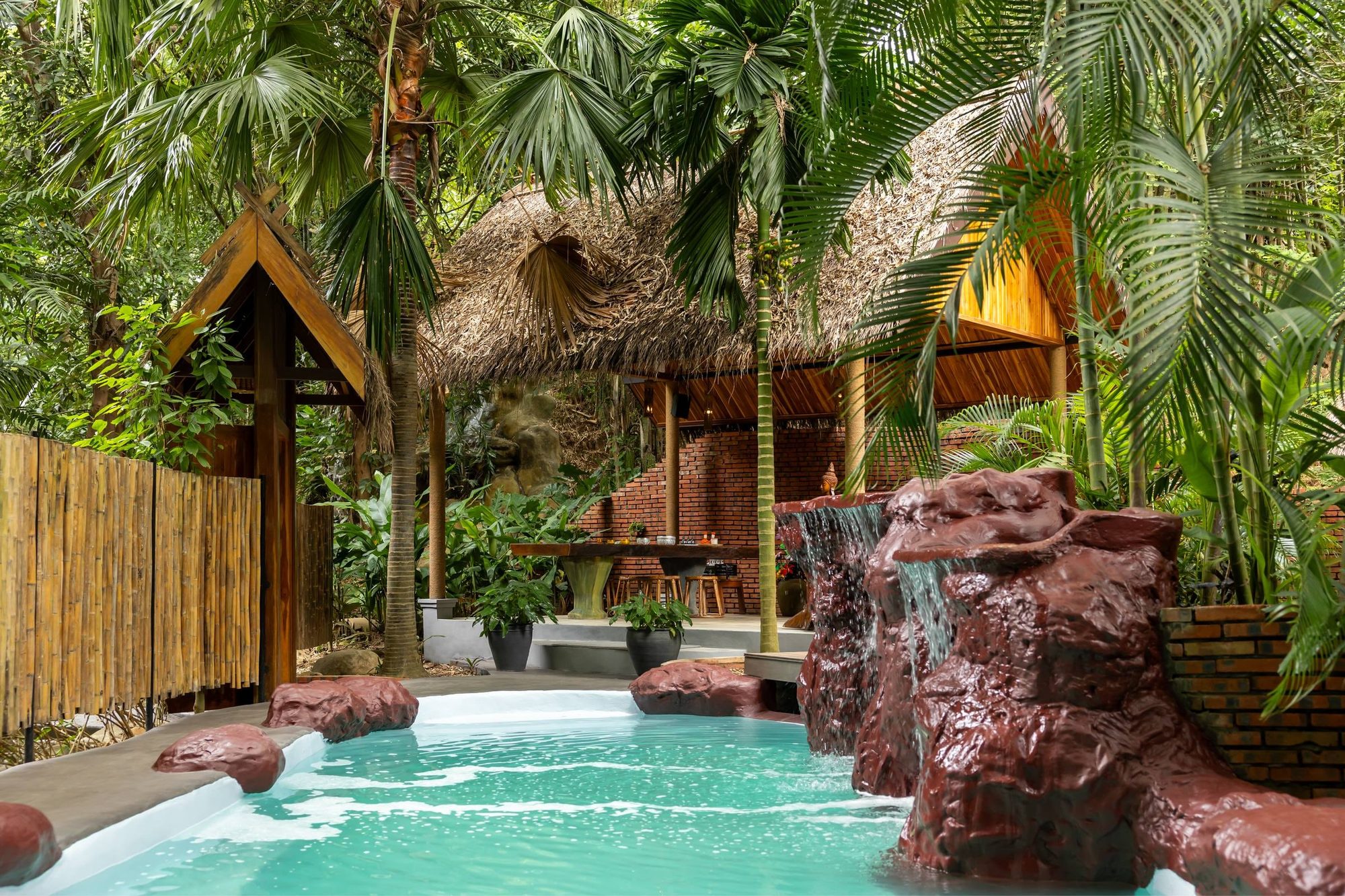
We sit beside the Nam Khan River, about fifteen minutes by tuk-tuk from the old town, and that rhythm reaches us too. Guests who join our Alms Giving Tour leave before the sun comes up and return for breakfast having watched something genuinely old — a living practice, not a recreation of one.
This guide covers the key wats, what makes each worth your time, the etiquette that lets you move through them respectfully, and how temples fit into a longer Laos itinerary.
The temples luang prabang visitors should not miss
Luang Prabang has more than thirty active monasteries, most within the UNESCO-protected peninsula formed by the Mekong and the Nam Khan. Each has its own character, but a few stand apart.
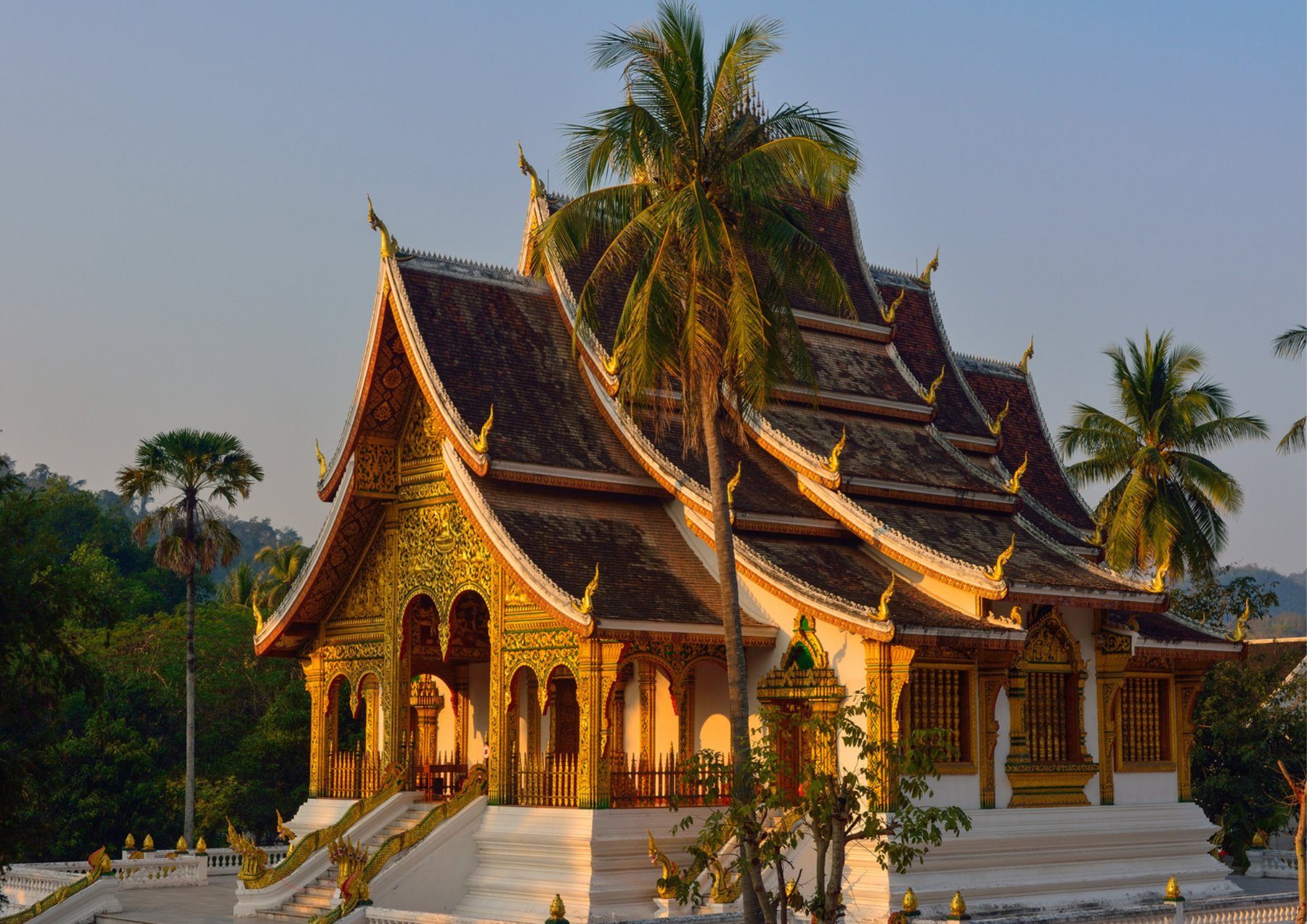
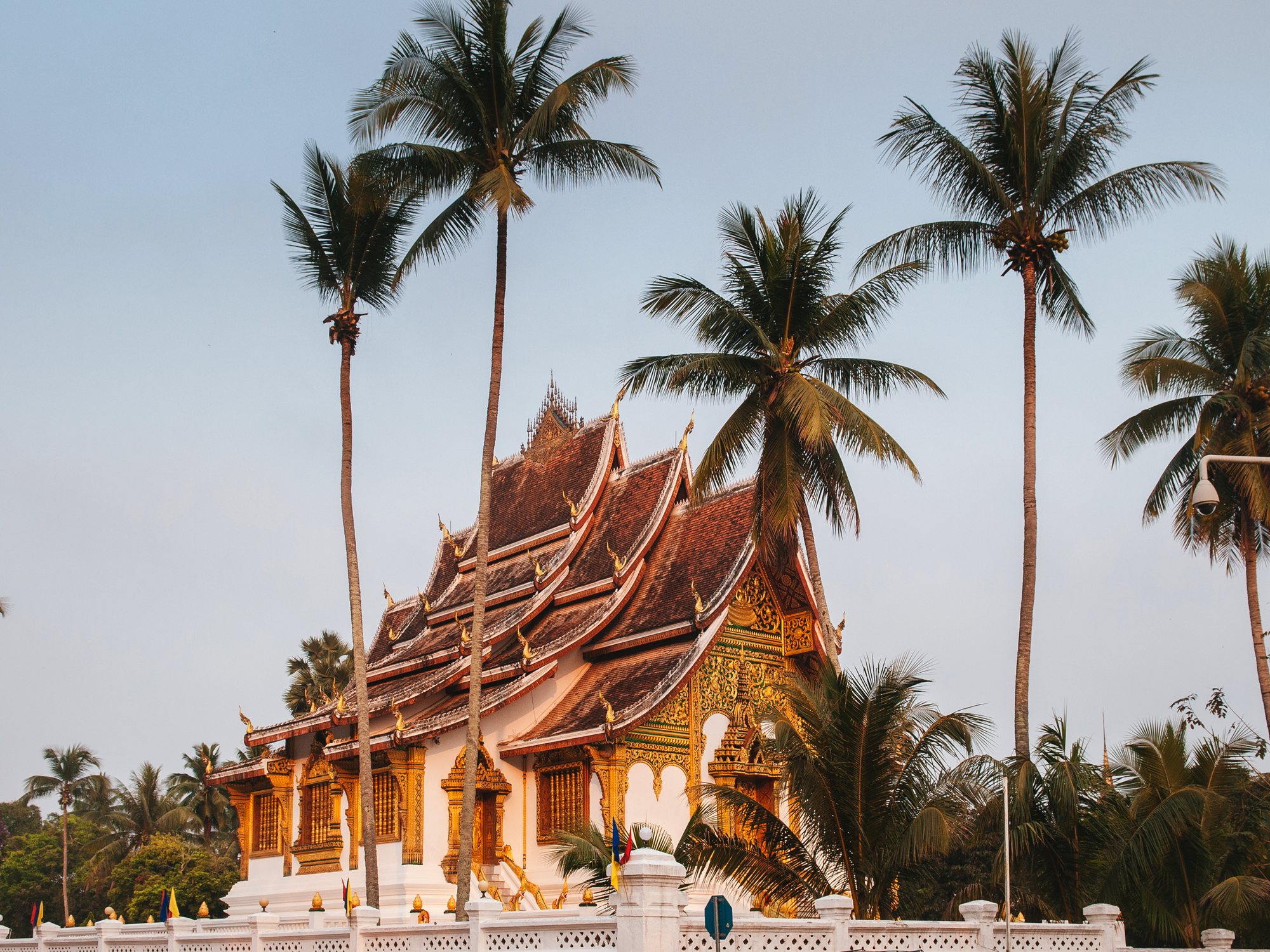
Wat Xieng Thong is the one that stops people. Built in 1560 under King Setthathirat, it sits at the northern tip of the peninsula where the two rivers nearly meet. The sim's roof sweeps in three tiers almost to the ground — the style known as dok sofa, flower-on-top. Behind it, a wall of coloured glass mosaic shows the tree of life. Inside, a gold chariot used for royal funeral processions stands in a side chapel. It is one of the best-preserved examples of Luang Prabang temple architecture anywhere.
Wat Mai Suwannaphumaham stands on the main road near the Royal Palace. Its five-tiered roof is later in style than Xieng Thong — built in the late eighteenth century, completed early in the nineteenth — but the gold-relief panels along the front veranda, depicting scenes from the Ramayana and the last life of the Buddha, reward slow attention. During Pi Mai (Lao New Year), the Phra Bang — the most sacred Buddha image in Laos — is brought out here for three days.
Wat Visounnarath (also written Wat Visoun) is the oldest temple still standing in Luang Prabang, built in 1513. It houses a large reclining Buddha and a collection of older images gathered from wats across the region. The watermelon stupa beside it, That Makmo, is a distinctive landmark. The whole compound is quieter and less visited than Xieng Thong — worth noting if you want to sit for a while without a crowd.
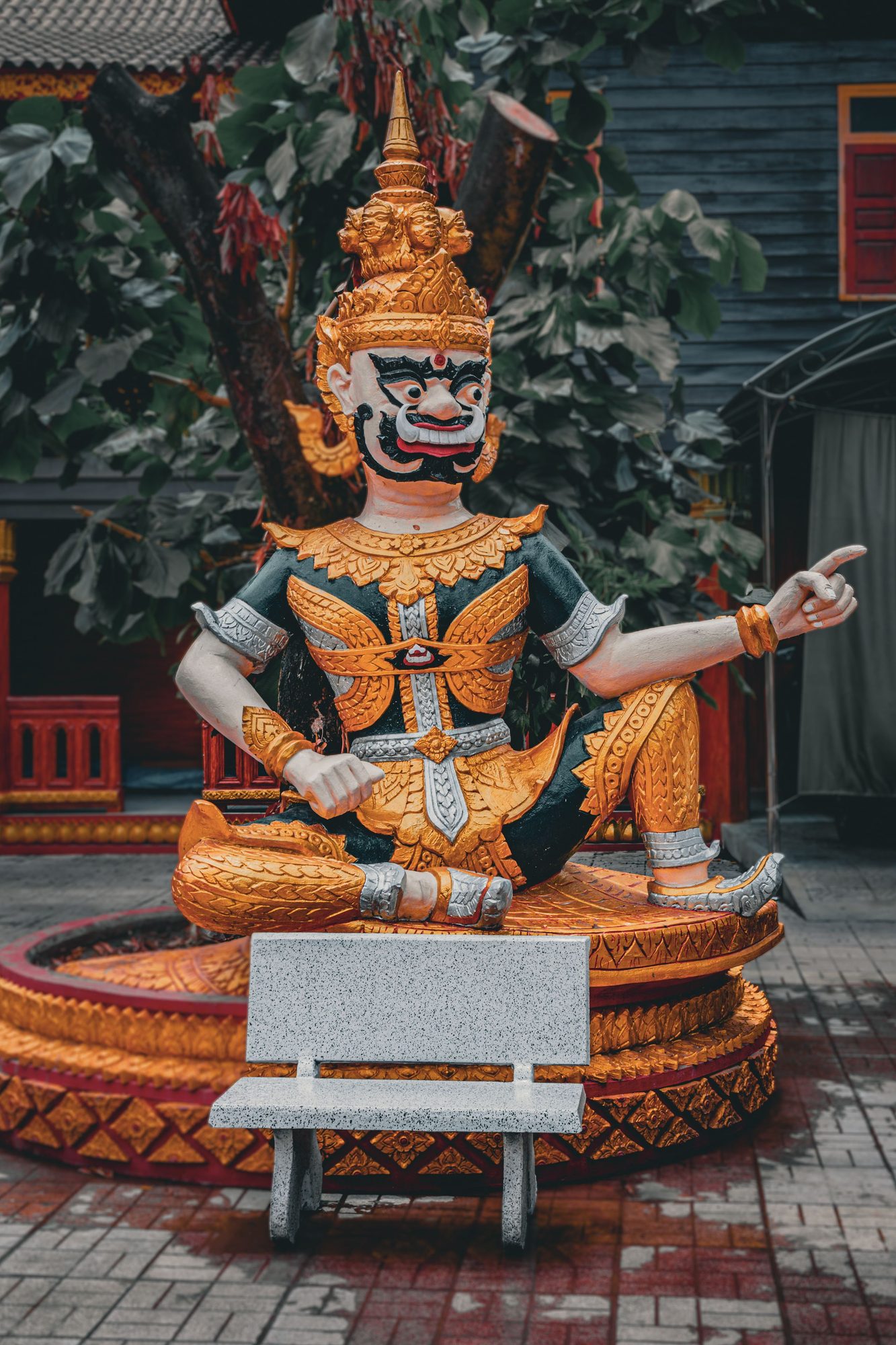
Wat Aham, next door to Wat Visoun, is rarely busy. Two large guardian spirits flank its entrance. The grounds hold very old trees shading a cluster of small stupas, and the atmosphere is working-monastery rather than heritage site — monks moving between buildings, a radio somewhere.
Wat Manorom, on the western fringe of the old town, holds a large bronze Buddha dating to the fourteenth century. The image lost its arms at some point in the town's history and they were later restored. The stories embedded in the repairs and reconstructions are as much a part of Luang Prabang temples as the original stonework.
For the forest temples, Wat Phon Phao sits on a hill south of the old town with a panoramic view across the valley. Built in the twentieth century as a peace pagoda, it is still used for meditation retreats.
 Related readSlow Boat to Luang Prabang: The Honest Guide
What makes luang prabang temples distinct
The architectural style here is specific to this region: multi-tiered rooflines, eaves that descend almost to the ground at the front of the sim, naga balustrades flanking the entrance steps. French protectorate rule slowed the urban redevelopment that changed other regional cities, and UNESCO listing in 1995 reinforced that protection.
The result is a town where active monasteries operate inside buildings that in other countries would be roped off as heritage sites. Monks receive their education here. Novices as young as eight or nine live in the compound. The economic and cultural functions of the temple — teaching, ceremony, community gathering — have continued without interruption.
The wooden fish drum that marks the morning hours is audible well outside the walls. It begins before most visitors are awake, sometime between four and five in the morning. Chanting follows shortly after. Staying close enough to hear it, even from across the river, is one of the quieter pleasures of spending a few nights in this region rather than passing through on a day trip.
- Cover up Shoulders and knees must be covered. Loose trousers and a light shirt work well. Sarongs are sometimes available at the gate, but carrying your own is more reliable.
- Remove your shoes Take off footwear before entering the sim. Sandals are quicker than lace-up trainers — a small practical point that matters when you visit several temples in one morning.
- Walk clockwise When moving around a stupa or through a compound, walk clockwise — the direction of the Buddha's teaching.
- Stay off the platform The raised platform around the sim is a sacred area. Step up only when entering the building, and do so with both feet.
- Sit respectfully If you sit on the floor inside a sim, point your feet away from Buddha images and from monks. Never sit with your back to an image.
- Keep voices low Temples are places of practice. Quiet conversation is fine; group discussions are not.
- Photograph thoughtfully No flash inside the sim. Never photograph monks without at least a nod of acknowledgement from them.
The morning alms giving — Tak Bat
One clarification before anything else: Tak Bat is a religious ceremony, not a spectacle. Monks walk a fixed route through the old town before sunrise, receiving sticky rice from residents who have risen early to give it. The practice is called sai bat by the monks themselves — an act of spiritual continuity that has not changed in centuries.
If you want to watch respectfully, stand well back from the procession, avoid flash photography, speak quietly, and dress as you would to enter a temple. Do not approach the monks, touch them, or place food in their bowls unless you have learned the correct form from a Lao resident.
We offer a guided Tak Bat experience — small groups, pre-dawn departure, with a team member who explains the ritual and guides you on where to stand and how to behave. Book through resort reception.
Going deeper: Wat Paphai and Buddhist practice
One of the more specific experiences we offer is a Buddhist lecture and meditation session at Wat Paphai, a working temple close to the property. Guests join monks for daily prayers and are introduced to the philosophy and practice of Theravada Buddhism — not through a guidebook, but in conversation.
Monks speak about their daily routine and how Buddhist teachings are applied to ordinary life. The meditation component is guided and accessible regardless of previous experience. It is one of the few experiences in the region where the exchange is genuinely two-way.
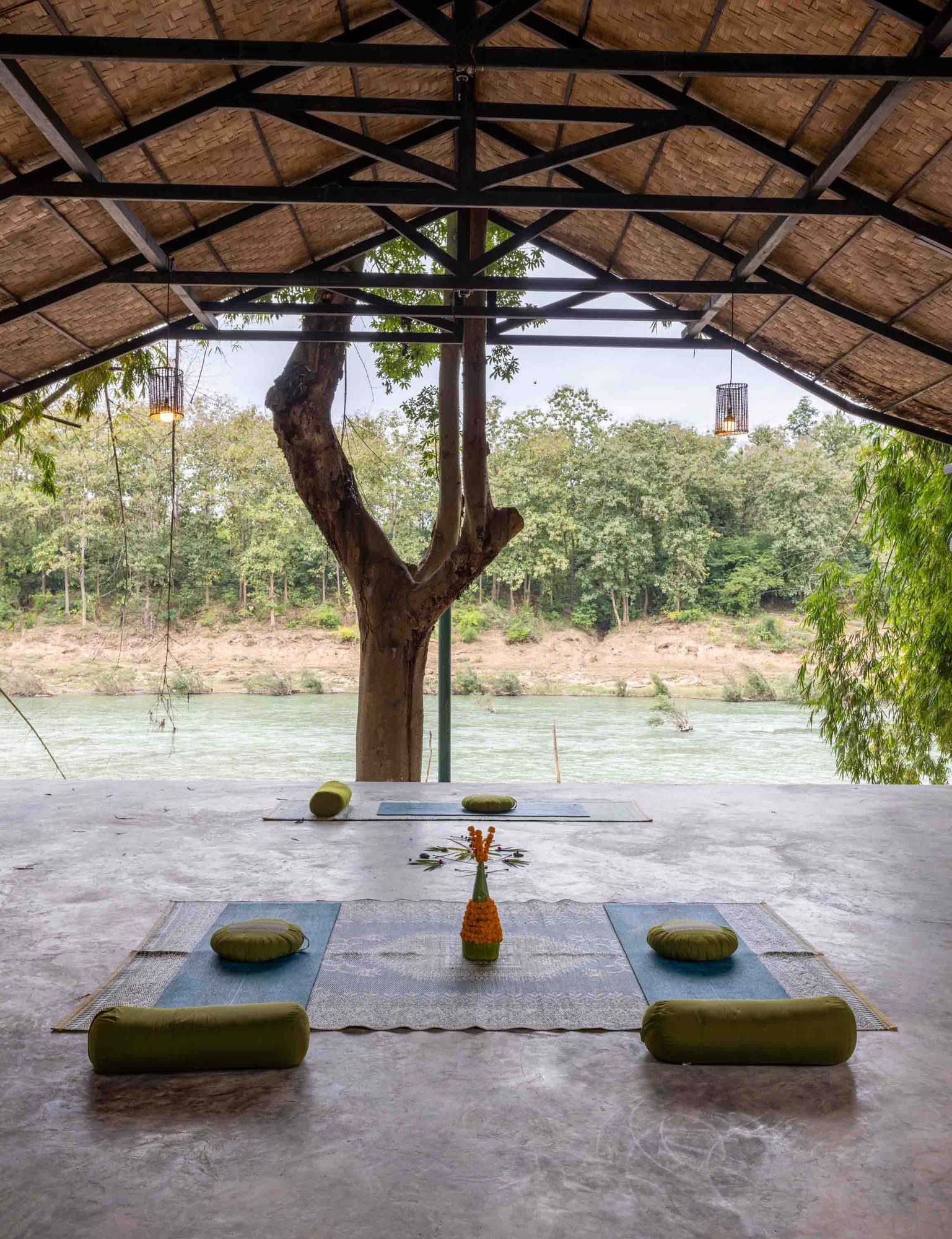
For guests who want to extend this into something longer, our Harmony & Mindfulness Retreat weaves daily meditation, qi gong and yoga into a two-to-six night programme on the river.
Fitting temples into your Laos itinerary
Temple visits work best before the heat builds. By 07:30 the town is already moving; by 09:00 some compounds are noticeably busier. A morning that starts at Wat Xieng Thong — often shared in that first hour with monks, local worshippers and very few other visitors — then works south along the river road through Wat Mai to Wat Visounnarath and Wat Aham, finishes well before midday.
Afternoons are better spent beside water. If you are staying with us, that means the river beach or the infinity pool. The light on the town improves again from around 16:00, and the evening market on the main road begins to set up around that time.
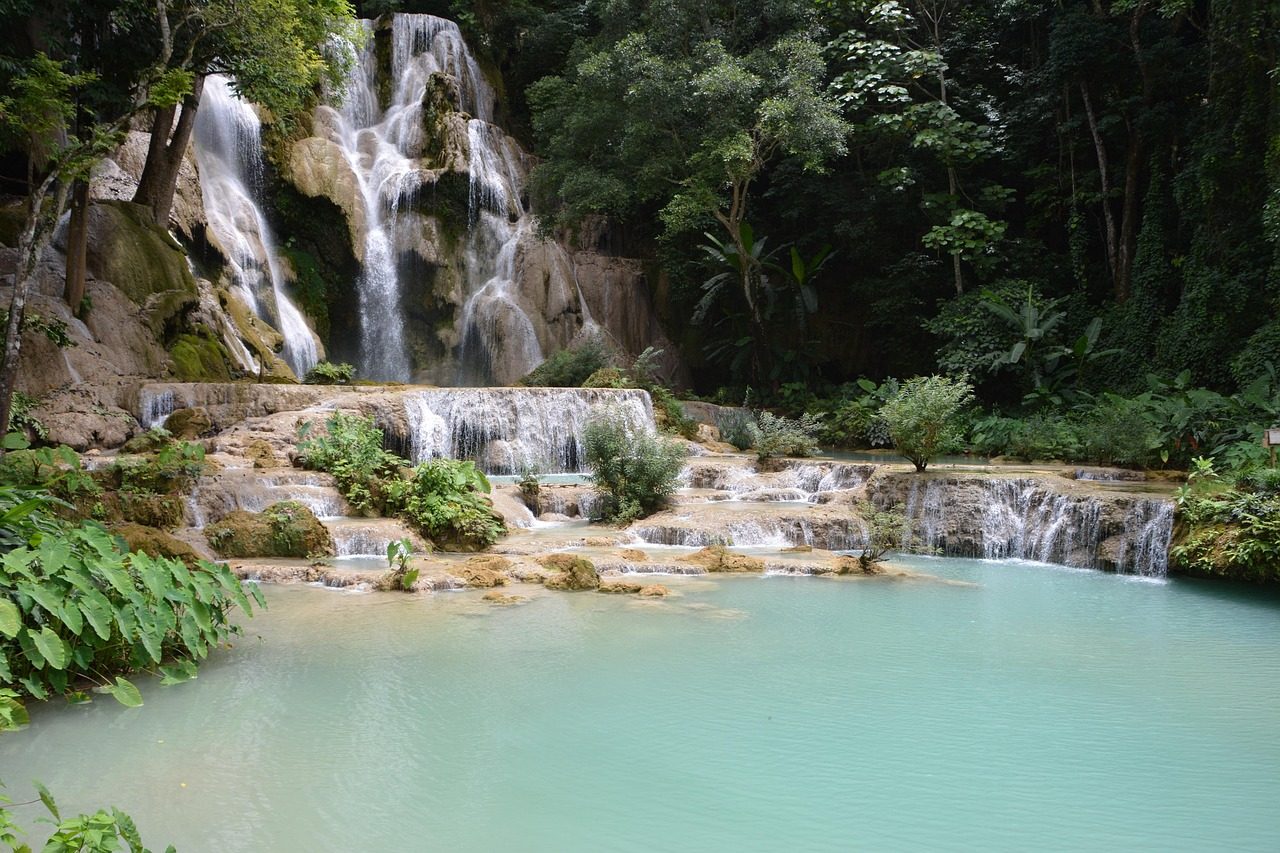
For a two-week Laos itinerary, Luang Prabang typically takes three to five days if you include day trips. Kuang Si waterfall is the most significant of them — about an hour from town by tuk-tuk (check current journey times and entry fees locally). The turquoise terraced pools are genuinely worth the trip.
Many guests combine a morning in the temples with an afternoon at Kuang Si, though that makes for a full day. Consider spreading them across two days if you have the time. For current information on festivals and seasonal closures, Luang Prabang Tourism is the most reliable local source.
Combining temples with the river
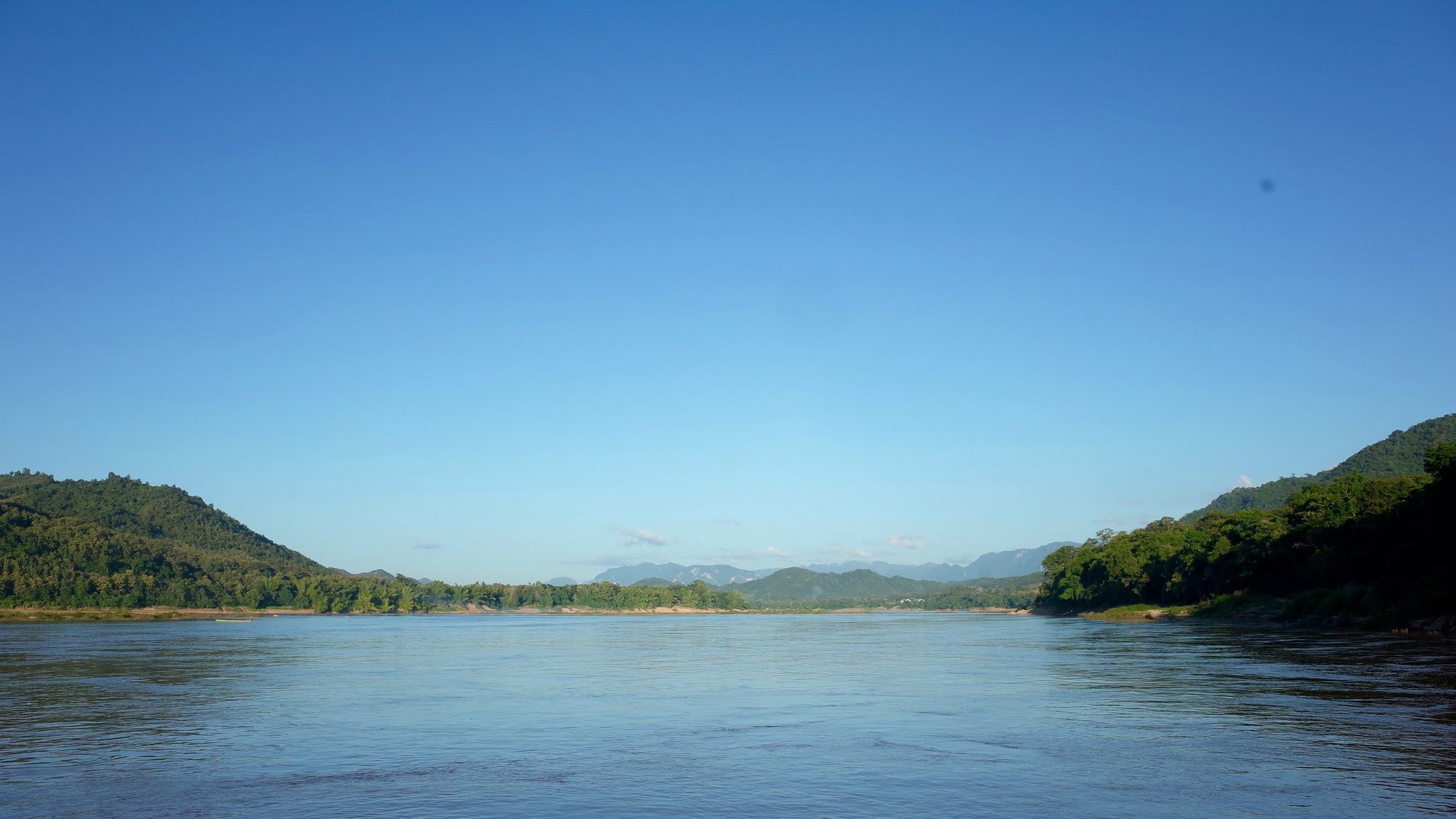
Guests sometimes say they did not expect the two to feel connected. But the Nam Khan and the Mekong are woven into the religious life of this town. River offerings are made at festivals. The Boat Racing Festival in October fills the Mekong with decorated pirogues. At certain times of year, lanterns are floated from the banks at night.
From the resort, we can see a temple roof through the trees on the far bank. In the late afternoon the gold catches the light. Our Flower Offering & River Meditation connects these two things directly: a guided meditation beside the water, followed by a traditional flower offering on the river at dusk. It is available to day guests and staying guests alike.
For further reading on Lao Buddhist heritage, UNESCO's page on Luang Prabang sets out the town's World Heritage designation in full.
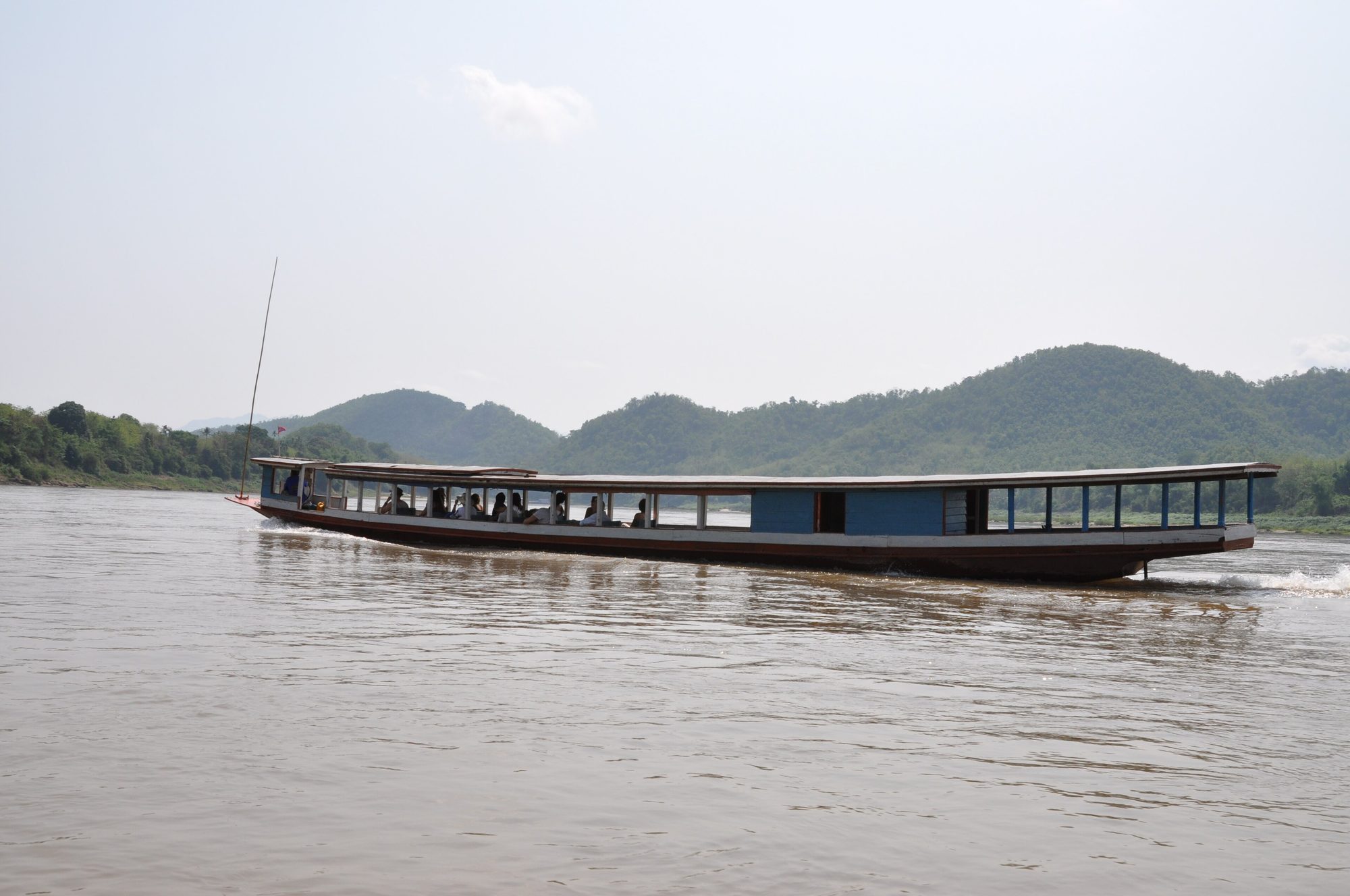
If you are thinking about slower travel beyond the temples, our guide to the slow boat to Luang Prabang covers the two-day river journey from the Thai border — a natural arrival for a town that moves at this pace.
Questions
What is Luang Prabang famous for?
Its concentration of well-preserved Buddhist temples, the daily Tak Bat alms-giving procession, and UNESCO World Heritage status. The whole town functions as a living monument to Theravada Buddhist culture.
How many days should you spend in Luang Prabang?
Three to five days covers the main temples, Kuang Si waterfall and a morning Tak Bat. On a two-week Laos itinerary, Luang Prabang typically takes four or five of them.
Is it safe to walk around Luang Prabang?
The old town is compact and very walkable. The main streets and temple lanes are active during the day and early evening. Use standard judgement after dark on quieter lanes.
Where is a good base for visiting the temples?
The old town peninsula puts you within walking distance of most wats. Staying further out — on the Nam Khan River, for example — adds about fifteen minutes by tuk-tuk and a great deal of quiet.
Thinking about a retreat? Tell us what you need.
A person from our team answers within 24 hours, in your language. No booking needed to ask.